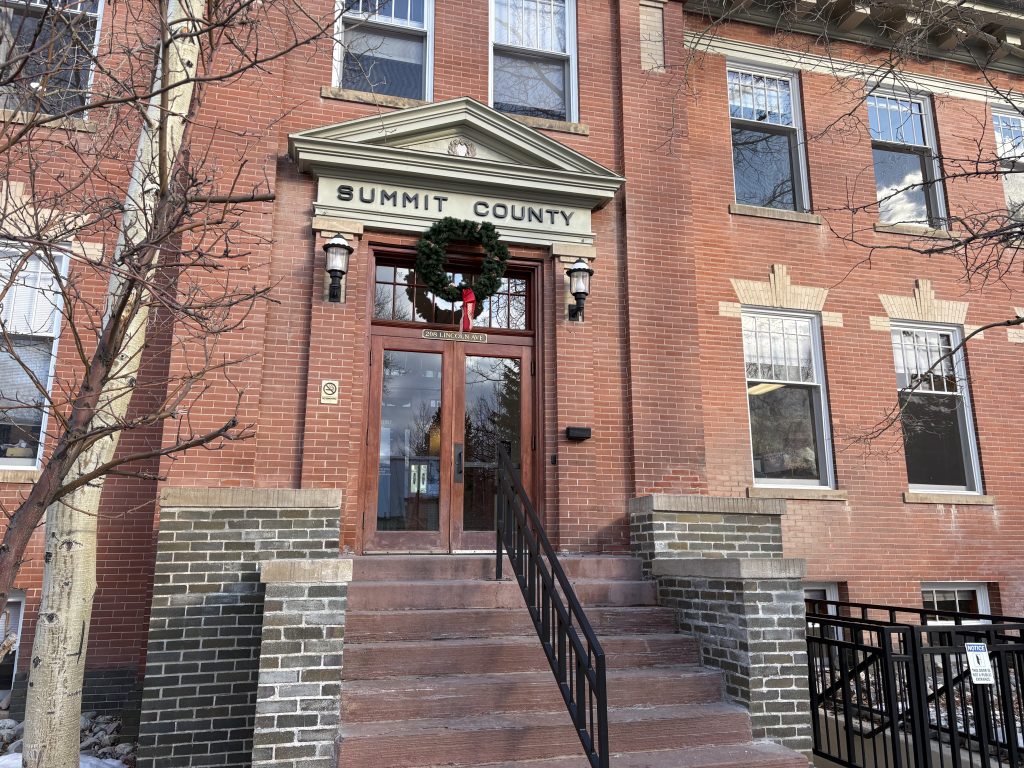
UPDATE: Summit County officials are considering urgent changes to fire sprinkler requirements, which could significantly impact homeowners and builders. During a work session on December 16, 2023, the Summit Board of County Commissioners discussed a proposal to lower the threshold for installing fire sprinkler systems in single-family homes from 6,000 square feet to 4,500 square feet.
The move, strongly recommended by the Red, White and Blue Fire Protection District and Summit Fire & EMS, is aimed at addressing increasing fire safety concerns. Glenn Morgan, the county’s chief building official, highlighted that this change is critical as local fire departments face staffing challenges due to rising call demands.
Fire Marshal Jay Nelson stated that current staffing levels struggle to meet safety standards for homes between 3,000 and 4,500 square feet, often placing firefighters in a defensive position during emergencies. “We’re not likely going to be able to stop that fire at a room-and-contents fire,” Nelson warned, emphasizing that this change could lead to greater losses in the community.
Concerns have been raised regarding the financial implications of this proposed requirement. Sprinkler systems can cost homeowners between $20,000 and $70,000, a significant burden for many. Commissioner Nina Waters expressed the need to balance safety with affordability, stating, “I support making homes as fire resistant as possible but do not want to create a crisis of affordability.”
Moreover, implementing these changes could result in substantial taxpayer burdens. Nelson estimated that staffing the fire departments to meet the new requirements could cost around $135,000 per firefighter, along with an additional $1.5 million for a fire truck and an estimated $30 million for facility upgrades.
The proposal has also ignited discussions about how these changes would affect additional dwelling units. If a homeowner adds an attached unit, Morgan explained that if the total square footage remains under 5,000 square feet, no sprinkler system would be required. However, determining what counts as a “significant renovation” remains contentious, with potential inconsistencies in enforcement.
Officials aim to adopt the proposed fire sprinkler changes by April 1, 2026, alongside the new Colorado Wildfire Resiliency Code mandated by the state. This code incorporates stricter building materials and defensible space requirements to enhance fire safety.
As the commissioners deliberate on these critical safety regulations, the community is urged to stay informed and engaged. The outcome of these discussions could reshape the landscape of home building and safety in Summit County.
Residents and stakeholders are encouraged to voice their opinions and concerns as the county seeks to balance fire safety with community affordability.