UPDATE: Organized crime has dramatically reshaped political landscapes across Latin America in 2025, prompting a surge in right-wing governments. New reports confirm that the rise of organized crime groups is not only fueling violence but also driving unprecedented migration flows throughout the region.
According to the Global Initiative Against Transnational Organized Crime, a staggering 39 organized crime groups are now operating across Latin America, becoming more interconnected and sophisticated in their operations. Criminal networks are engaging in a broad spectrum of illicit activities, including extortion, human trafficking, and arms smuggling.
Hugo Contreras, a researcher at the School of Government at Universidad del Desarrollo, explains that these groups have evolved beyond traditional trafficking. “The diversification of activities has multiplied their income sources and territorial control,” he stated. This alarming trend is exacerbated by institutional weaknesses, such as collapsed prison systems that have morphed into logistical hubs for criminal organizations.
The rise in violence is not just a local issue; it is transforming security dynamics into international threats. Contreras emphasized that these criminal organizations impose their own rules and challenge state authority, forcing governments to rethink their strategies. “Comprehensive responses that combine financial intelligence, border security, and international cooperation are now crucial,” he said.
In a stark illustration of the violence, Mexico, Ecuador, Brazil, and Haiti ranked among the world’s 10 most dangerous countries in 2025, according to the Armed Conflict Location and Event Data Project (ACLED). The situation is dire: Ecuador is on track to record the highest homicide rate in Latin America for the third consecutive year, with gang-related violence resulting in over 3,600 deaths.
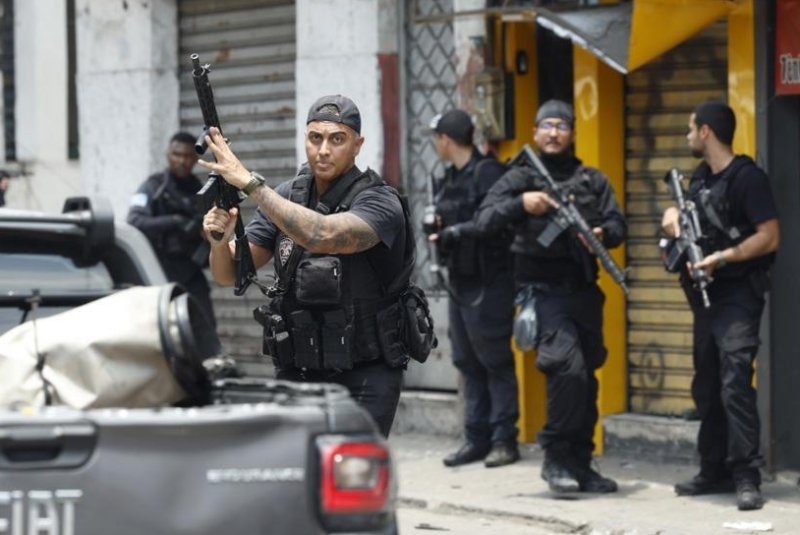
In Mexico, escalating internal conflicts, such as those within the Sinaloa cartel following the arrest of notorious leader Ismael “El Mayo” Zambada, have contributed to a surge in violence. Meanwhile, in Brazil, organized crime has intensified clashes for territorial control, particularly in cities like Rio de Janeiro, where a police operation targeting the Comando Vermelho resulted in 121 deaths.
The political ramifications are profound, with at least 10 countries in the region electing right-wing governments in the past year. These administrations, as noted by Pablo Carvacho from the Center for Justice and Society at the Pontifical Catholic University of Chile, are prioritizing public order and employing more aggressive law enforcement strategies. “Such approaches often include military deployment and harsher penalties,” Carvacho explained.
As the situation escalates, Carvacho warns that relying solely on emergency measures will not suffice to combat transnational organized crime. “What can truly weaken these organizations is targeting their financial assets and protecting vulnerable populations from recruitment,” he said.
The urgency for coordinated international action has never been greater. The implications of organized crime’s proliferation extend beyond crime statistics; they threaten the very fabric of social and political stability across Latin America. As governments grapple with these challenges, the need for innovative and comprehensive strategies to address the root causes of crime is paramount.
This developing story highlights the urgency and complexity of organized crime’s impact on society, and it is a critical moment for governments to act decisively. The world watches as Latin America confronts a formidable and evolving threat.