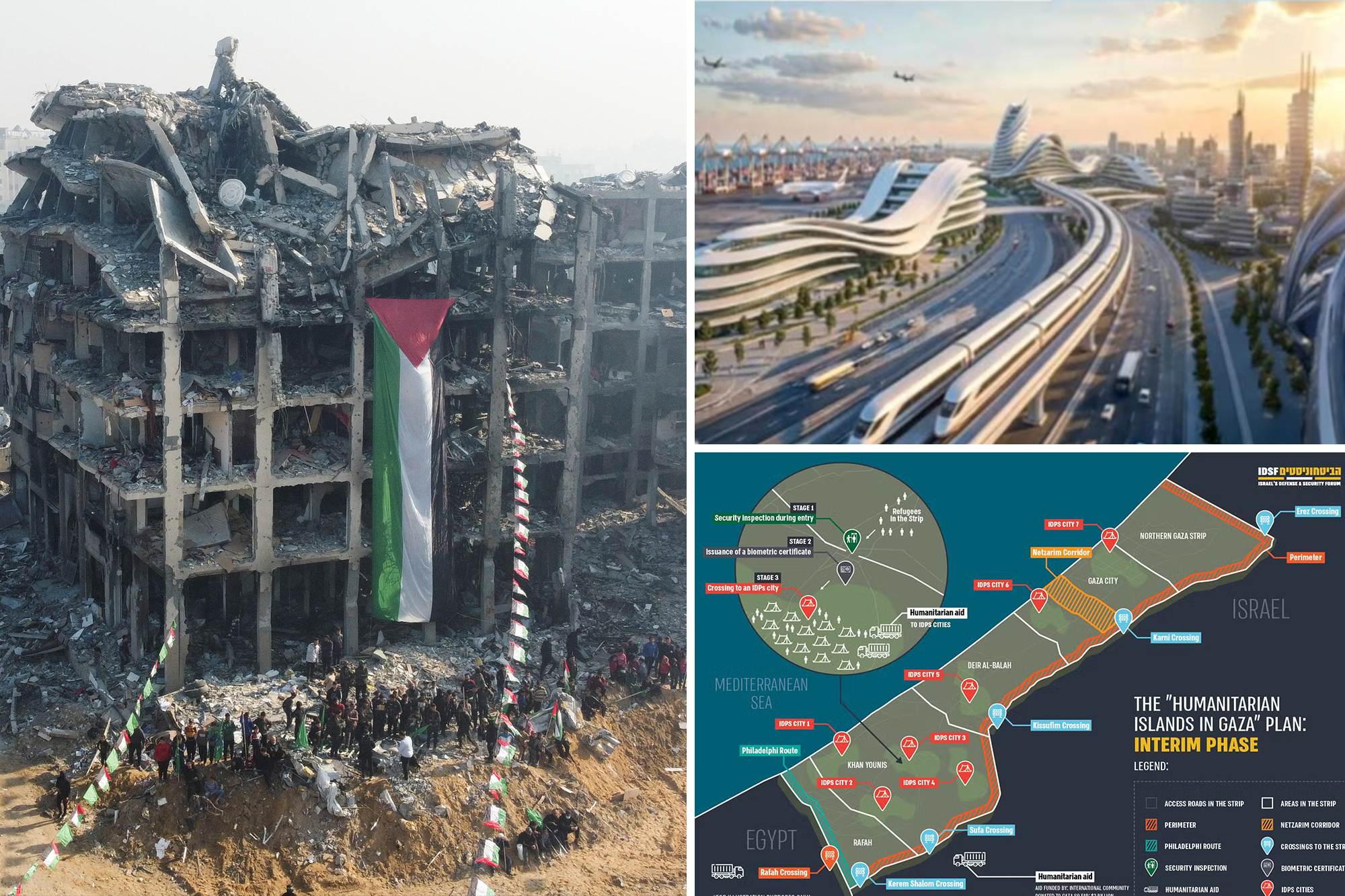
A new proposal aims to transform war-torn Gaza into an advanced urban hub with a budget of $112 billion. Known as “Project Sunrise,” this ambitious plan has been developed by Jared Kushner, the former U.S. president’s son-in-law, and Steve Witkoff, the U.S. special envoy, alongside key White House staff. The initiative seeks to attract investor countries and outlines a comprehensive ten-year development strategy.
The plan envisions Gaza as a “smart city,” equipped with luxury hotels, high-speed rail, and an AI-optimized infrastructure. According to a report by the Wall Street Journal, the presentation includes a 32-slide PowerPoint detailing how to convert the current devastation into a vibrant destination along the Mediterranean coast. The proposal emphasizes not just restoration, but the creation of a “gateway of prosperity in the Middle East” through cutting-edge urban design and technology.
Project Sunrise outlines a financial commitment in which the United States would contribute $60 billion in grants and debt guarantees. This funding would play a crucial role in executing the plan over the next decade. The executive summary states, “Gaza’s destruction has been profound, but we believe what lies ahead is not just restoration — it’s a chance to reimagine the region.”
Key features of the proposal include the establishment of a “Chief Digital Office” and an innovation lab aimed at setting standards and guiding policy. However, the presentation lacks specific details regarding potential investors or the companies that would join this rebuilding effort.
Challenges and Concerns
While the plan outlines distinct phases of construction, it does not address the housing needs of the approximately 2 million Palestinians who may be displaced during the redevelopment process. The aftermath of the conflict has left around 68 million tons of rubble across Gaza, a daunting challenge for any reconstruction effort.
Despite the ambitious vision, U.S. officials express skepticism about the plan’s viability. A critical condition for its success is the disarmament of Hamas, a point that has raised concerns regarding the plan’s feasibility.
To facilitate discussions around this initiative, Witkoff recently met with high-level delegations from Egypt, Turkey, and Qatar in Miami. These discussions were part of the second phase of the Gaza cease-fire plan, indicating an ongoing diplomatic effort to stabilize the region.
As the proposal takes shape, stakeholders will need to consider both the potential benefits and the significant hurdles that lie ahead in transforming Gaza into a modern city.