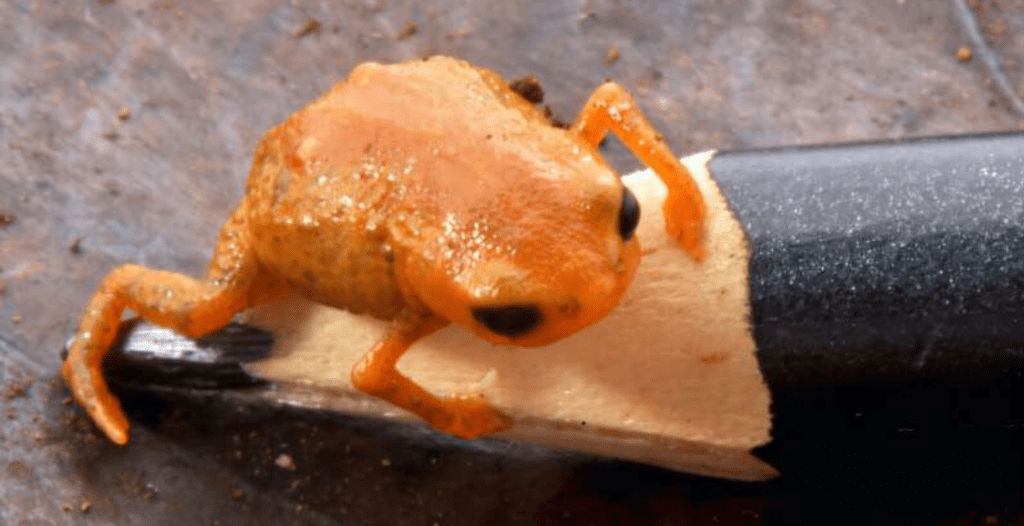
UPDATE: Researchers have just confirmed the discovery of a new species of pumpkin toadlet in the mountains of southern Brazil. This tiny amphibian, named Brachycephalus lulai, measures less than a Tic Tac and boasts a vibrant orange hue reminiscent of a traffic cone.
Discovered at an elevation of over 750 meters (2,460 feet) in the Serra do Quiriri range of Santa Catarina, this adorable creature has remained undetected until now, highlighting the ongoing challenges in the field of science where smaller discoveries often go unnoticed.
Researchers have spent seven years surveying these rugged mountains, focusing on identifying the various orange-colored frogs in the region. The breakthrough came after the team tracked the unique mating calls of the male toadlets, with females being collected more haphazardly. DNA sequencing and physical trait comparisons confirmed that this was not a mere variation of a known species, but a distinct lineage.
The new species is named in honor of Brazilian President Luiz Inácio Lula da Silva, underscoring a call for increased conservation efforts for the Atlantic rainforest and the vulnerable amphibians that inhabit it. The study, published in PLOS One, states that B. lulai currently resides in a relatively intact forest area, placing it in the “least concern” category for now. However, this classification does little to mask the threats facing its habitat.
While B. lulai is safe for the moment, other species in the region face dire challenges from grazing, invasive species, tourism, and deforestation. Amphibians remain the most threatened group of vertebrates globally, and the precarious state of their habitats emphasizes the urgency for conservation measures.
Brazilian authorities are currently discussing the establishment of a federal conservation unit in the area, a strategic move that would not require the purchase of private land. Researchers such as Dr. Bornschein emphasize the necessity of fieldwork in this challenging terrain, where long hikes and dense forests complicate resources and accessibility.
The discovery of B. lulai not only adds to the biodiversity of the region but also serves as a reminder of the fragile ecosystems that exist on the mountaintops of Brazil. As conservation conversations escalate, the story of this tiny toadlet may galvanize public support and awareness about the critical need to protect these unique habitats.
With the plight of amphibians becoming increasingly urgent, every new finding like this underscores the importance of ongoing research and conservation efforts. If researchers overlook these small creatures, we risk losing them before we even know they exist.
Stay tuned for more updates on this developing story and the future of conservation in Brazil.