UPDATE: Bulgaria’s government has officially resigned as of October 5, 2023, following widespread protests that have swept through the nation. This dramatic political shift comes just weeks ahead of the country’s anticipated entry into the eurozone, raising urgent questions about the stability of the government and the future of economic reforms.
Mass protests erupted across Bulgaria in recent weeks, with citizens expressing their discontent over a range of issues, including corruption and economic hardship. The demonstrations intensified, leading to a critical tipping point that forced Prime Minister Galab Donev and his cabinet to step down.
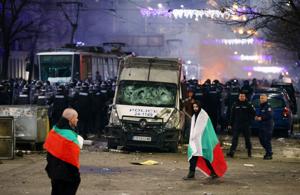
The resignation has sparked immediate reactions from both the public and political analysts. Protesters gathered outside government buildings in Sofia, chanting for change and demanding accountability. Many citizens feel let down by the current administration, especially with the eurozone integration looming on the horizon.
Why This Matters NOW: With Bulgaria set to adopt the euro in just a few weeks, the resignation of the government creates a vacuum of leadership at a critical juncture. Economic experts warn that this instability could jeopardize Bulgaria’s readiness for the eurozone transition, impacting financial markets and potentially leading to a decline in investor confidence.
In a statement to the press, Donev acknowledged the public’s frustrations and highlighted the need for immediate reforms. “We have heard the people’s voice, and it is time for a new direction for our country,” he stated. However, the path forward remains uncertain, as the nation faces challenges in forming a new government capable of addressing the pressing issues at hand.
What’s Next: Political analysts are closely monitoring developments in Sofia. The resignation sets off a chain reaction; a caretaker government will likely need to be appointed to ensure stability during this transition period. Furthermore, the timeline for Bulgaria’s eurozone membership may be at risk as the country navigates a political landscape fraught with uncertainty.
As Bulgaria stands at a crossroads, citizens are left wondering how these events will shape their future. The resignation is not just a political event; it is a pivotal moment that could redefine the nation’s trajectory in both the short and long term.
Stay tuned for updates as this story develops. The situation remains fluid, and the implications of this resignation will unfold in the coming days, making it essential to keep an eye on Bulgaria’s next steps toward a stable and prosperous future.