
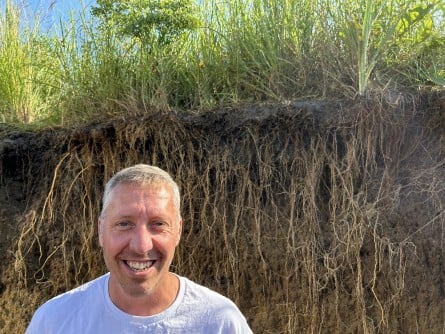
Research from Iowa State University has revealed that prairie strips can significantly enhance soil health more quickly than previously anticipated. Conducted in collaboration with the Soil Health Institute, the study highlights the benefits of integrating 30-100 foot strips of herbaceous perennial plants within agricultural fields. These strips aim to mimic the ecological advantages of Iowa’s native prairies while minimally impacting crop production. The findings were published in the Journal of Soil and Water Conservation.
Previous investigations indicated that prairie strips, occupying about 10% of a field, could boost biodiversity, provide pollinator habitats, reduce erosion, and improve water quality. However, their effects on soil health had not been thoroughly explored until now. The new research demonstrated that prairie strips can lead to substantial improvements in several soil health indicators within a decade, with specific gains observed in eight out of twelve measured metrics.
Key Findings of the Study
The study identified notable enhancements in soil aggregate stability, microbial biomass, soil organic matter, and maximum water-holding capacity. In particular, soil aggregate stability increased by up to 80%, while microbial biomass and soil organic matter saw boosts of up to 54% and 23%, respectively. The maximum water-holding capacity improved by as much as 7%, indicating a greater ability for the soil to retain moisture.
“It was an exciting surprise to see the degree of these changes over just a decade or so,” said Marshall McDaniel, associate professor of agronomy at Iowa State, who coordinated the study team.
Throughout the study, aggregate stability and maximum water-holding capacity continued to improve, although microbial biomass and soil organic matter plateaued over time. The research utilized a “paired chronoscope” methodology, comparing 15 paired control and treatment sites that featured prairie strips ranging from 2 to 13 years old. Most sites were located on private farmland, and the study focused on the top six inches of soil.
Broader Implications for Agriculture
Additional insights emerged from the research regarding microbial communities. These communities showed significant changes extending from the prairie strips into adjacent cropland soils, resulting in elevated enzyme levels that could enhance nutrient cycling and carbon storage. The impact on soil moisture and plant-available nutrients extended more than three feet (up to one meter) from the strips, with negligible effects on crop yields.
The research suggests that prairie strips can rapidly yield benefits, yet they occupy only a small portion of a field. Lisa Schulte Moore, director of ISU’s Bioeconomy Institute, noted that some farmers are considering rotating their prairie strips every ten years to distribute these benefits throughout their fields. This approach is being explored by Cole Dutter, who completed his doctorate in sustainable agriculture and soil science while leading this study.
Dutter plans to continue his research on prairie strips at California State University, Stanislaus, where he will further investigate how these practices can enhance soil health and potentially improve crop yields. He emphasized the importance of understanding whether these benefits translate into deeper carbon storage within the soil profile.
The study also highlighted accessible methods for measuring soil health, which can be conducted by landowners without specialized knowledge. For instance, aggregate stability can be assessed using a smartphone app called Slakes, while maximum water-holding capacity can be determined with simple tools like a funnel and coffee filter.
The funding for this research came primarily from the Foundation for Food and Agriculture Research and the USDA Farm Service Agency, with additional support from the National Science Foundation and USDA Hatch funds. As the scientific community continues to explore the benefits of prairie strips, the implications for sustainable agriculture and environmental stewardship remain promising.


