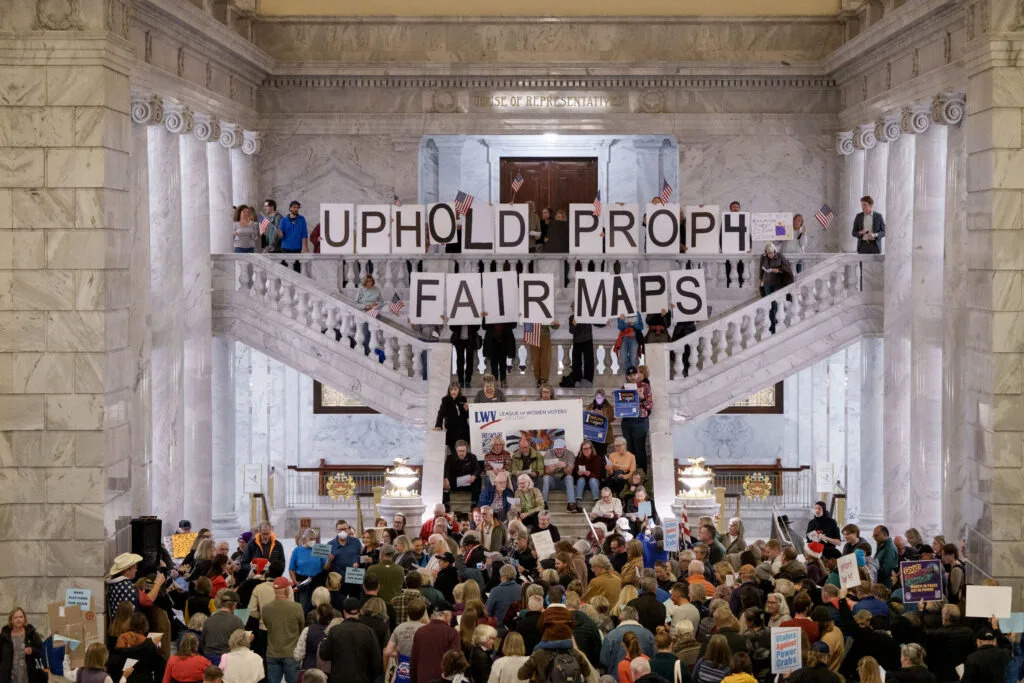
UPDATE: Tensions are escalating in Utah as lawmakers clash with the judiciary over the state’s contentious congressional redistricting. Just hours ago, over 100 protesters rallied outside the Capitol in Salt Lake City, demanding lawmakers listen to the public’s call for fair representation.
The protest unfolded on December 9, 2025, as demonstrators sang, “Hear our voice; hear our voice; hear us as we say: Don’t ignore the voters ’cause we’re fighting back today.” Their message was clear: Utahns are fed up with gerrymandering and demand transparency in the electoral process.
Inside the Capitol, the Republican-controlled Legislature convened for a special session aimed at countering a court-ordered redistricting process. This legal battle has resulted in a congressional map that creates one Democratic-leaning district and three Republican-dominated ones. Lawmakers passed several bills today to facilitate an appeal to the Utah Supreme Court, setting the stage for a major showdown ahead of the 2026 elections.
During the session, lawmakers approved measures to delay candidate filing deadlines and expedite their appeal process. House Majority Leader Casey Snider, R-Paradise, delivered a blistering critique of the courts, stating, “I cannot look my constituents in the eye and tell them they can trust this judiciary any longer.” This sentiment reflects a growing frustration among Republican lawmakers, who believe the judiciary is overstepping its authority.
The resolution passed by the Legislature condemns the courts for their handling of redistricting, asserting, “We reject the court-ordered, special interest groups’ map.” This non-binding measure aims to signal lawmakers’ discontent with judicial interventions in the redistricting process.
Judge Dianna Gibson, who ordered the new map, has defended her decision, citing the courts’ duty to ensure lawful electoral maps when legislative bodies fail to act. In her recent analysis, Gibson emphasized that the judiciary’s role in this process is well-established and necessary for upholding constitutional rights.
The redistricting fight has deeper roots, stemming from a lawsuit led by pro-democracy groups including Better Boundaries and the League of Women Voters of Utah. The groups argue that the Legislature violated voters’ rights when it repealed Proposition 4, a 2018 ballot initiative that aimed to establish an independent, impartial redistricting process.
Despite the ongoing legal challenges, Republican lawmakers argue that the judicial map is unfairly partisan. They claim it solidifies a Democratic advantage in certain districts, directly contradicting the intent of Proposition 4, which was designed to promote fairness.
As lawmakers push back against the judiciary, voices from the protest resonate with growing urgency. Activists like Elizabeth Rasmussen, Executive Director of Better Boundaries, assert that the Legislature’s actions reflect a disregard for the will of the people. “They don’t want to follow what the Constitution says. They don’t want to follow what the courts say. They don’t want to follow what the people have said through a ballot initiative process,” she stated.
The special session today has sparked renewed debate about the balance of power between the Legislature and the judiciary, raising concerns about the integrity of Utah’s electoral process. As the state gears up for the 2026 elections, the implications of this clash will be significant.
WHAT’S NEXT: The Utah Supreme Court’s upcoming decisions could reshape the electoral landscape as lawmakers prepare for an aggressive legal battle. In the meantime, the push for fair maps continues, with activists urging lawmakers to heed the voices of their constituents and accept the court-ordered map.
Stay tuned for developing updates on this urgent situation as it unfolds in Utah.