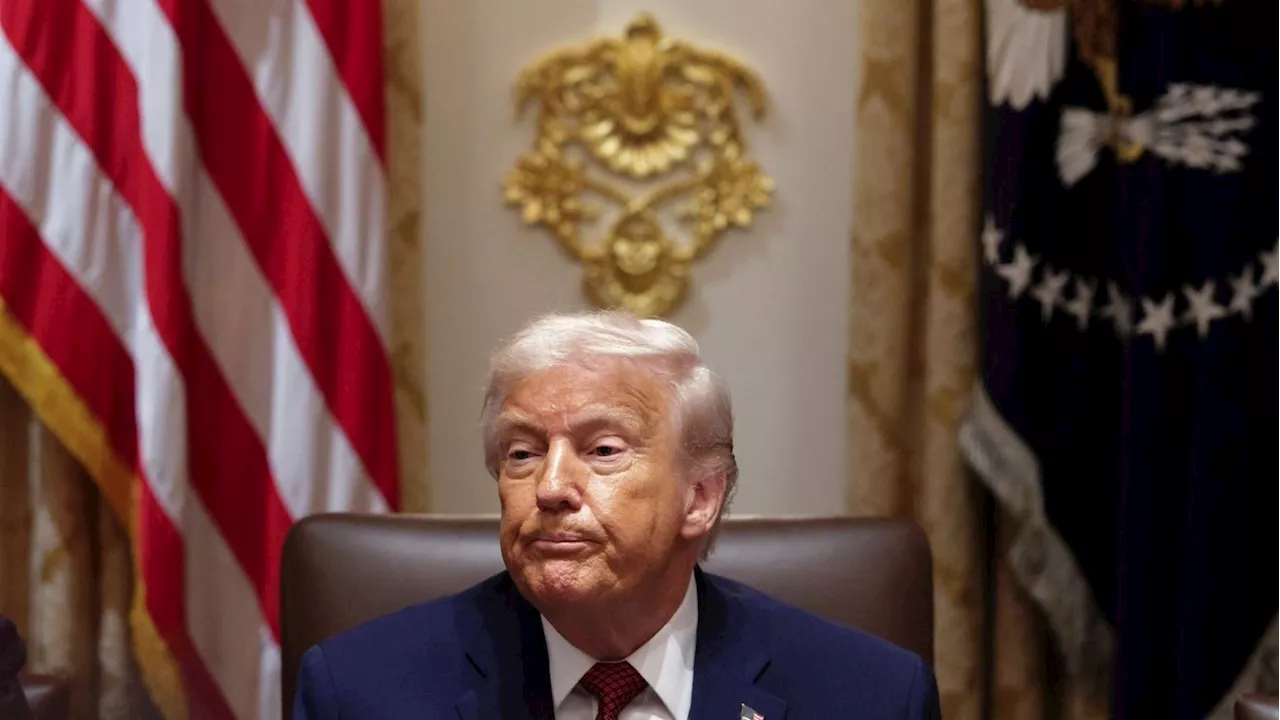
BREAKING: President Donald Trump has just announced plans to sign an executive order aimed at establishing a unified national framework for artificial intelligence (AI) regulation, preempting a confusing array of state laws. This urgent move comes as concerns mount over the rapid development of AI technology, which many believe is outpacing existing regulatory measures.
In a post on social media earlier today, Trump emphasized the need for a “One Rulebook” to maintain U.S. leadership in the AI sector. “We are beating ALL COUNTRIES at this point in the race,” he declared. “But that won’t last long if we have 50 States involved in RULES and the APPROVAL PROCESS. AI WILL BE DESTROYED IN ITS INFANCY!”
The executive order is expected to be signed this week, as the Trump administration aims to address the patchwork of state regulations that many argue stifle innovation. The president’s announcement follows the failure of Congress to effectively legislate AI standards, with over 150 AI-related bills introduced in previous sessions but none becoming law, according to the Brennan Center for Justice.
Industry stakeholders are eagerly awaiting this decisive action. Many tech advocates, like Adam Kovacevich, founder of the Chamber of Progress, argue that the current state-driven legislation creates a pessimistic environment for AI development. “Most voters want to capture the upsides of AI while minimizing its abuses. But right now, we don’t fully understand those abuses,” he stated.
However, not everyone is on board with this federal approach. Florida Governor Ron DeSantis criticized the executive order, stating, “An executive order doesn’t/can’t preempt state legislative action.” He emphasized that a comprehensive regulatory scheme from Congress is essential for any lasting change.
Critics point out that while a national standard is desirable, it cannot simply be established through an executive order. “You need bipartisan discussions in Congress to create effective rules of the road,” Kovacevich added, expressing skepticism about the timeline for such collaboration.
As the landscape of AI continues to evolve rapidly, the urgency for federal regulation has never been more critical. Trump’s imminent executive action seeks not only to streamline the approval process for AI technologies but also to safeguard the U.S.’s competitive edge in a field that is fundamentally reshaping global economies and daily lives.
Stay tuned for more updates as this developing story unfolds and the implications of Trump’s executive order become clearer. The future of AI regulation in the United States hangs in the balance, with significant impacts for consumers, businesses, and innovators alike.