Hong Kong Baptist University (HKBU) has taken significant action by sealing off a student bulletin board following the display of memorial posters for the victims of a tragic fire that occurred at Wang Fuk Court. This devastating incident, which took place on November 26, 2023, resulted in the deaths of at least 159 individuals and stands as one of Hong Kong’s deadliest disasters.
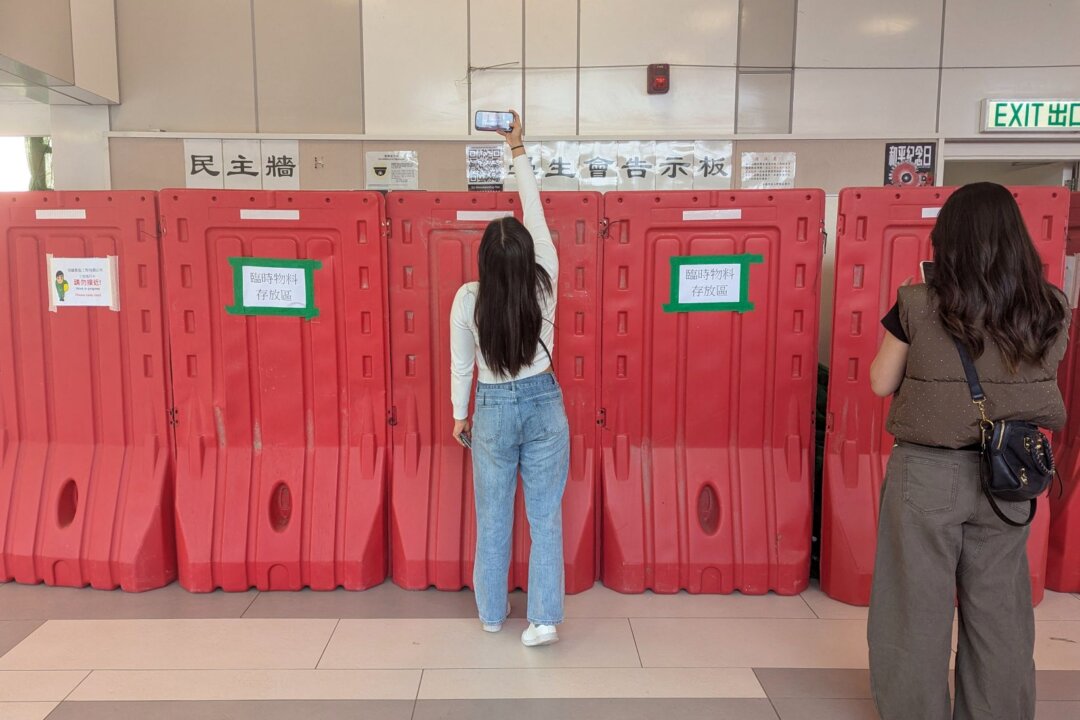
On December 2, the HKBU Student Union displayed large posters on its designated bulletin board, often referred to as the “democracy wall.” The messages included phrases such as “In deep mourning for the victims of the Wang Fuk Court fire” and “We urge the government to respond to public demands so justice can be served.” Just one day later, university officials responded by blocking access to the bulletin board with barricades and plastic panels, effectively silencing the messages of condolence.
In an unexpected turn of events, HKBU informed the Student Union that its operations were suspended indefinitely. This suspension includes control over printing facilities and bulletin boards traditionally managed by the union. Student leaders were instructed to vacate their office by December 6. The union condemned the abrupt decision, stating that it lacked proper consultation and calling for dialogue with university administrators.
The university did not provide comments to inquiries from The Epoch Times regarding the suspension or its reasoning.
Public Outcry and Reactions
The sealing off of the bulletin board has drawn significant criticism from the public, particularly among Hong Kong residents. Many questioned why expressions of grief and calls for justice would be perceived as politically sensitive. Online comments reflected widespread discontent, with one user stating, “Every word on those posters is normal—why are even the words ‘justice’ taboo now?” Another lamented, “Even expressing grief isn’t allowed? Should the university prefer we laugh instead?”
Local media reported that, on the same day the posters were displayed, the area around the bulletin board was designated a “temporary material storage zone,” with construction materials piled behind the barriers. Security personnel instructed journalists to refrain from filming freely in the vicinity.
Political Climate and Arrests
The actions taken by HKBU come amidst growing tensions in Hong Kong, particularly regarding demands for an independent investigation into the fire. On November 29, a public petition organizer advocating for a four-point list of demands, including an independent inquiry, was arrested for alleged online “incitement.” Reports indicated that Kenneth Cheung, a former district councillor, was also taken into custody by the Hong Kong Police National Security Department.
The Hong Kong Association for Democracy and People’s Livelihood (ADPL), a pro-democracy political party, had to cancel a press conference scheduled for December 2, with organizers citing governmental pressure as the reason. Participants, including ADPL chairman Bruce Liu, reported being contacted by the National Security Department for meetings.
Online discussions among Hong Kong residents suggest a perceived shift toward a governance style reminiscent of mainland China, particularly following the imposition of the National Security Law in 2020. This tragedy is now being viewed through a lens of national security, raising concerns about freedom of expression and the right to mourn publicly.
The situation highlights the ongoing complexities within Hong Kong’s political landscape and the implications for civic engagement and expression in the wake of a national tragedy.