UPDATE: President Donald Trump has just announced a radical shift in U.S. foreign policy, demanding that Europe must be fully capable of defending itself by 2027. This directive comes as part of his newly released 33-page security strategy, which emphasizes a significant reduction in American military support for European nations.
In a striking declaration, Trump’s strategy states, “The days of the United States propping up the entire world order like Atlas are over.” This development signals a pivotal change in the trans-Atlantic alliance, as NATO prepares to mark its 80th anniversary on April 4, 2029.
The urgency for Europe to bolster its own defense capabilities arises as the European Union had already set a target of 2030 for self-sufficiency in defense. With current shortfalls in areas such as air defense and cyber warfare, analysts warn that this accelerated timeline could be overly ambitious.
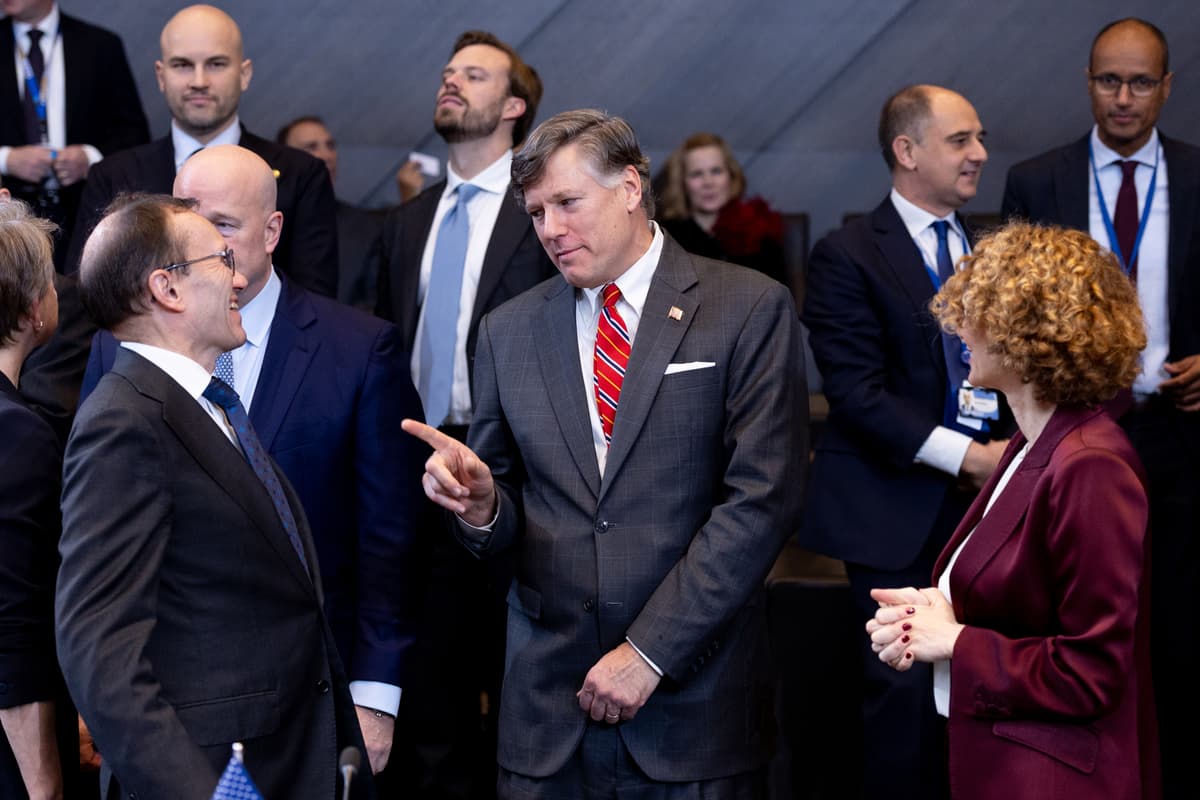
The implications are vast. Christopher Landau, the U.S. Deputy Secretary of State, emphasized on social media that “Europe must take primary responsibility for its own security.” This message aligns with a long-standing sentiment from U.S. administrations, but now it is being pushed to the forefront, with a clear deadline.
According to reports from Reuters, the U.S. aims for Europe to assume control over NATO’s conventional defense capabilities, including intelligence and missile systems, by 2027. This move pivots the responsibility of European defense away from the U.S., fundamentally altering how America collaborates with its closest military partners.
The strategy document also criticizes European leaders for their handling of immigration, expressing concerns over “cratering birthrates” and the influx of non-European migrants. The report warns that if current trends continue, Europe may become “unrecognizable” within two decades. This alarming assertion has sparked backlash among centrist politicians, with former Swedish Prime Minister Carl Bildt labeling the report’s rhetoric as “bizarre” and “extreme.”
In Germany, Foreign Minister Johann Wadephul defended the strong ties between the U.S. and Europe, asserting that the U.S. remains “our most important ally.” However, the message from Trump’s administration has found support among hard-right political factions within Europe, with members like Markus Frohnmaier of the Alternative for Germany party endorsing it as a “foreign policy reality check.”
Critics, including U.S. Representative Jason Crow, argue that this strategy could harm America’s global standing and weaken existing alliances. The report also addresses the ongoing conflict in Ukraine, calling for a halt to NATO expansion and suggesting that European leaders have unrealistic expectations for resolving the war due to “censorship of public opinion.”
As Trump’s envoy, Steve Witkoff, engages in diplomatic discussions between the Kremlin and Ukrainian officials, analysts warn that Trump’s desire for a swift peace in Ukraine could lead to dire consequences for European stability. London-based financial analyst Timothy Ash cautioned that such agreements might leave Ukraine vulnerable to future Russian aggression.
In a rapidly evolving geopolitical landscape, Europe faces a crucial crossroads. The question remains: can European nations come together to meet the ambitious timeline set forth by the U.S. administration? As the world watches, the implications for international security and cooperation are profound.
Stay tuned for further updates as this story develops.