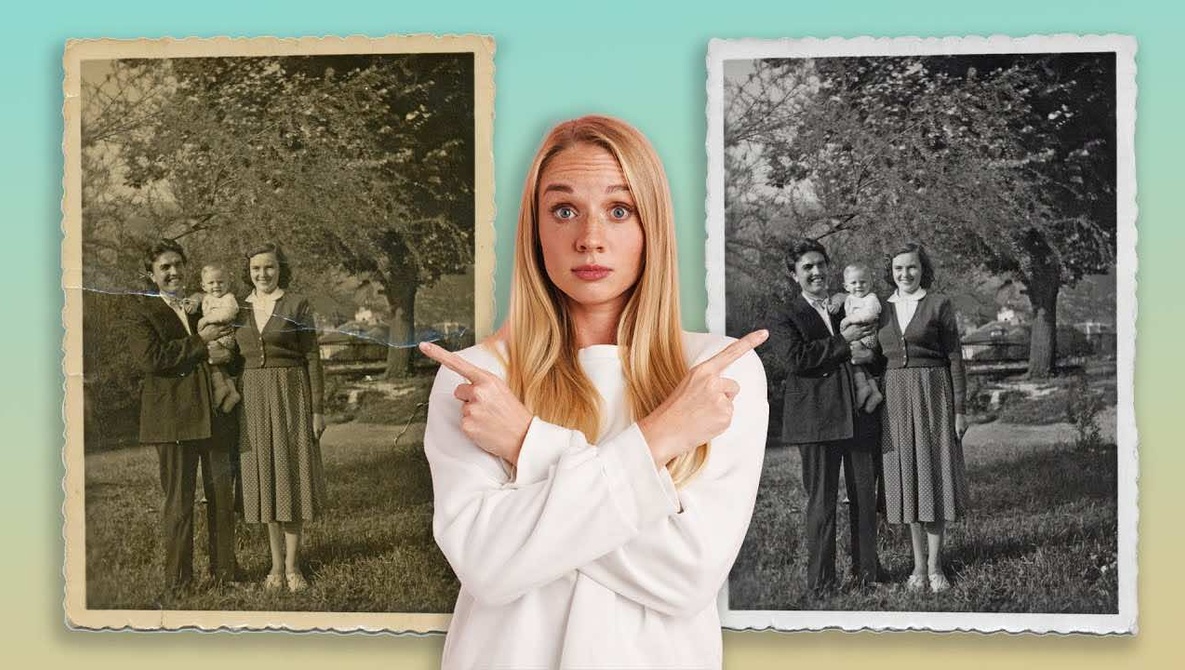
UPDATE: Photoshop has just unveiled its groundbreaking AI feature, enabling users to effortlessly restore damaged family photos in mere minutes. This innovative tool, powered by the Gemini 3 model and Nano Banana Pro, utilizes Photoshop’s Generative Fill to bring faded and cracked images back to life, a process that traditionally took hours of meticulous editing.
In a compelling demonstration, expert Morganti reveals how to select the entire frame of a photo and utilize the Generative Fill feature for restoration. By simply entering “repair, restore, and remove yellow color cast,” users can achieve remarkable results with a single prompt. This streamlined process highlights a major shift in digital photo restoration, making it accessible for everyone, especially those with treasured family memories.
The emotional impact of this technology is profound, as many families rely on these images as their only visual record of ancestors. Morganti emphasizes that the faces in restored images remain recognizable, a common pitfall with other AI restoration tools. This ensures that the emotional connections to these historical photos are preserved.
As the video progresses, Morganti showcases the sensitivity of the Gemini 3 model to prompt adjustments, particularly regarding color. He tests the tool twice on the same damaged print, first allowing it to remove the yellow cast and then retaining the sepia tone with a more refined prompt. The side-by-side comparison highlights how significantly the mood of the image shifts when the yellow stains are neutralized.
However, users are cautioned about the limitations of the AI. When Morganti pushes the boundaries by asking for “repair, restore, and colorize,” he notes notable changes, such as altered hats and costume details, raising concerns about historical accuracy. This serves as a reminder that restoration and colorization are fundamentally different interventions, each requiring careful consideration.
Later in the video, Morganti applies this technique to a badly faded color photo and a personal family image from the end of World War II. The Gemini 3 model effectively cleans up scratches and stabilizes tones, showcasing its potential. Nonetheless, it also lays bare its limits, urging users to maintain realistic expectations. The restoration process is a strong first pass but may not be a total fix for every archival issue.
As AI technology continues to evolve, this latest advancement in Photoshop presents a significant leap for photo enthusiasts and families alike. Users are encouraged to approach the restoration process with a blend of excitement and caution, knowing when to embrace the AI’s capabilities and when to revert to manual retouching for final touches.
For a full demonstration of this powerful tool, check out Morganti’s video above. The implications for preserving family history are immense, making this a must-watch for anyone passionate about safeguarding their visual legacy.
Stay tuned for further updates on AI developments in digital photography.