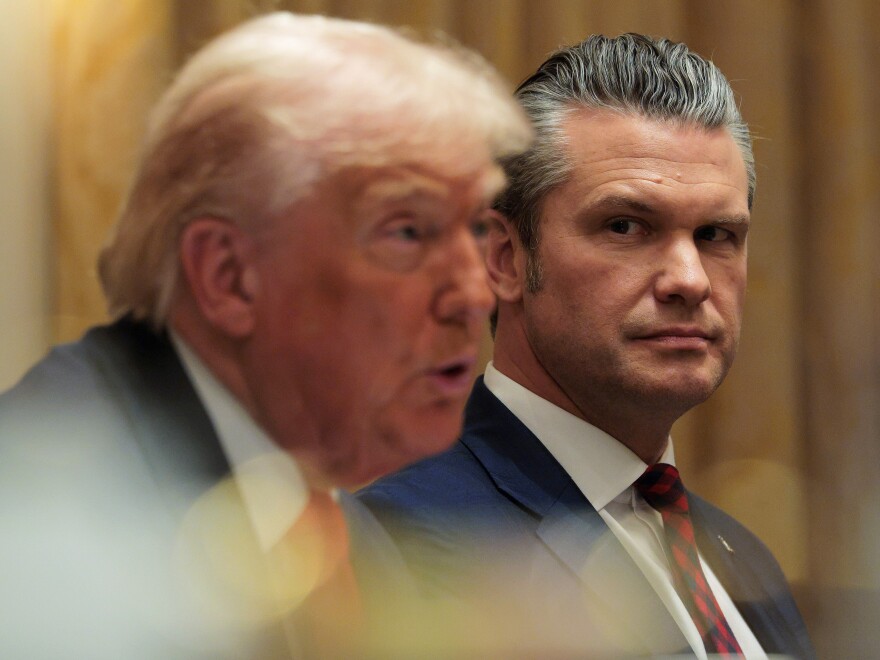
URGENT UPDATE: A new report from the Pentagon’s Inspector General confirms that Defense Secretary Pete Hegseth violated government policy by using the Signal messaging app to discuss sensitive U.S. airstrikes targeting Houthi rebels in Yemen. This alarming development follows a months-long investigation led by Steven Stebbins, which was initiated after a journalist revealed in March 2025 that he was included in a Signal chat where high-level officials discussed military operations.
The 84-page report, released on Thursday, raises serious concerns about the potential risks posed by Hegseth’s actions. It states that Hegseth shared crucial military information, including the number and timing of manned U.S. aircraft strikes, over an unapproved and insecure network just 2 to 4 hours before the operations were executed. This breach of protocol could have jeopardized the safety of American servicemembers and the overall mission.
According to the report, “Using a personal cell phone to conduct official business and send nonpublic DoD information through Signal risks potential compromise of sensitive DoD information, which could cause harm to DoD personnel and mission objectives.”
Despite these findings, Hegseth declined to participate in the investigation. He provided a written statement asserting that the information he shared did not require classification. In a statement prior to the report’s release, Pentagon spokesman Sean Parnell defended Hegseth, claiming that the Inspector General’s findings amounted to a “TOTAL exoneration” and confirmed that no classified information was shared.
This incident raises urgent questions about cybersecurity protocols within the Pentagon and the handling of sensitive information. The implications of such breaches could resonate beyond the immediate concerns of operational security, affecting trust within military ranks and raising alarms about the possible exposure of U.S. strategies.
As this story develops, observers are urged to consider the broader impact of communication practices in the Defense Department. Will the Pentagon enforce stricter policies to prevent such breaches in the future?
Stay tuned for updates as this story unfolds and more details emerge.